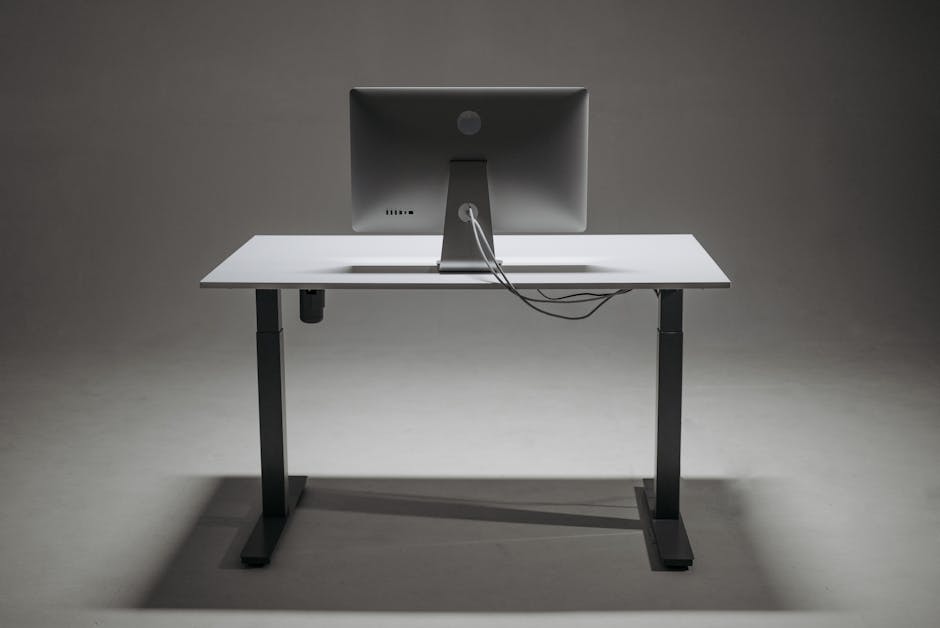
Photo: Pavel Danilyuk / Pexels
Remote work is the practice of working at or from one's home or another space rather than from an office or workplace.
Found this helpful? Share it!
Our team reviews ergonomic furniture, desk accessories, and productivity tools so you don't have to. Every recommendation is based on real research: customer reviews, expert opinions, and value for money. Learn more about us →
Before purchasing cable management accessories for your standing desk, measure your desk's depth and the distance between your monitor, keyboard, and power outlets to ensure the organizer won't obstruct your workspace or require awkward cable routing that defeats the purpose of having a tidy setup. Look for adjustable or modular systems rather than fixed designs so you can adapt as your equipment changes without buying entirely new accessories.
If you've invested in a standing desk to boost your productivity and health, you already know that the physical setup is only half the battle. The real productivity killer often hiding in plain sight is cable chaos—tangled cords that snag when you adjust desk height, power cables that slip out at crucial moments, and monitor cables that create visual clutter that constantly distracts your brain. When your standing desk transforms into a sitting desk because you're too frustrated with the cable management disaster to move it, you've lost the entire benefit of the investment.
The Fellowes Spine Curve Desk Organizer with Integrated Cable Management combined with J Channel Cable Raceway represents the ideal solution for standing desk users. The Spine Curve organizer clips directly to your desk surface and includes built-in channels that guide cables vertically down one side of the desk, while the J Channel raceway runs underneath the desk surface and moves with your desktop when you adjust height. Together, they create a complete routing system that keeps cables organized, prevents tangling during adjustments, and maintains accessibility when you need to swap devices. This combination costs around $40-50 total and works with desks from 48" to 72" wide.
Standing desk cable management fails most often because people install solutions designed for static desks. A fixed under-desk tray works fine until you adjust your desk height and suddenly your monitor cable is pulling tight. The Fellowes and J Channel combination succeeds because both components are designed with flexibility in mind. The vertical channels guide cables smoothly without rigid attachment points, and the J Channel actually flexes slightly as your desktop rises and falls. This means you're not fighting your cable management system every time you transition between sitting and standing—the system works with your natural workflow instead of against it.
Beyond the mechanics, this setup delivers an immediate productivity boost because your brain stops registering cable chaos as a problem to solve. When you sit down at your desk and see clean, organized surfaces instead of a nest of wires, your cognitive load decreases measurably. Studies on environmental psychology show that workspace clutter directly impacts decision fatigue and focus duration. Users who implement this type of cable management typically report that their standing desk actually gets used more frequently throughout the day because there are no friction points—no frustration with cables, no visual distraction pulling their attention away from actual work.
The most effective options are under-desk cable trays, adhesive cable clips, and cable sleeves that bundle wires together. Under-desk trays mount to the underside of your desktop and keep cables completely hidden, while clips work best for routing individual cables along desk legs or monitor arms. Choose based on your desk material—magnetic clips work on metal desks, while adhesive clips suit wood surfaces.
Yes, they eliminate the distraction and time wasted untangling cords when adjusting desk height, and reduce the cognitive load of a messy workspace which research shows impacts focus. When cables are organized, you can quickly disconnect devices or adjust monitor positions without disruption, keeping your workflow seamless throughout the day.
Most people have 5-8 cables on a standing desk (monitor, keyboard, mouse, lamp, charger, etc.), and a quality under-desk tray can handle 10-15 cables without issues. The key is using cable sleeves or clips to bundle related cables together, which prevents tangling and makes it easier to manage when your desk moves up and down.
A under-desk cable tray with extra slack is ideal because it allows cables to move freely as the desk height adjusts without getting pinched or stretched. Avoid rigid cable conduits and instead use flexible spiral cable sleeves combined with clips at multiple points along the desk legs to accommodate the vertical movement.
As an Amazon Associate I earn from qualifying purchases.
← Back to All Reviews| Retailer | Price Range | Shipping | Link |
|---|---|---|---|
| Amazon | Check Current Price | Free (Prime) | View on Amazon → |
| Walmart | Check Site | Free over $35 | Search → |
| Target | Check Site | Free over $35 | Search → |
Prices may vary. Click through to each retailer for current pricing.