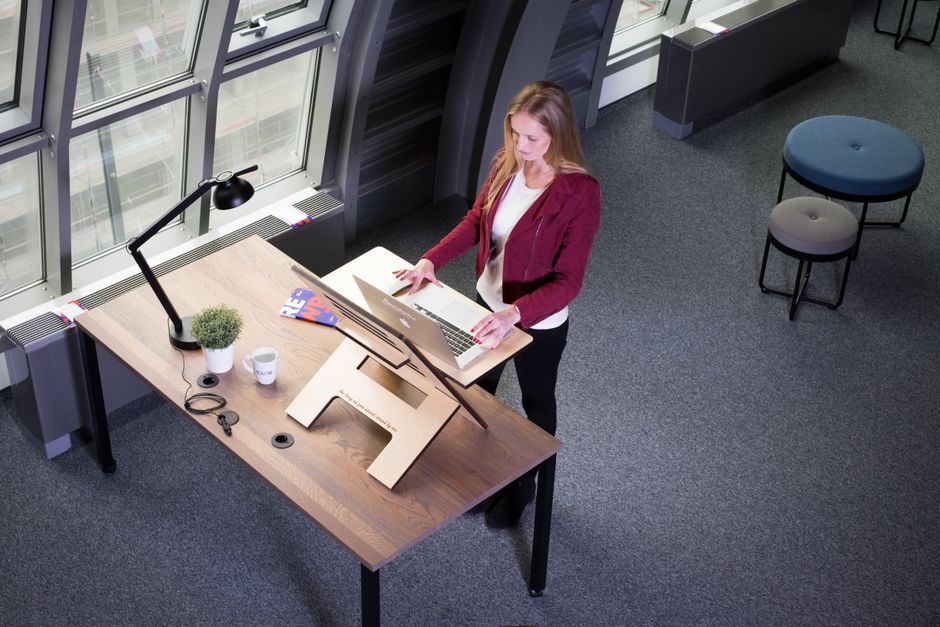
Photo: Standsome Worklifestyle / Pexels
Remote work is the practice of working at or from one's home or another space rather than from an office or workplace.
Found this helpful? Share it!
Our team reviews ergonomic furniture, desk accessories, and productivity tools so you don't have to. Every recommendation is based on real research: customer reviews, expert opinions, and value for money. Learn more about us →
Standing desks can improve productivity and health, but only when used correctly and combined with movement throughout the day. The key is alternating between sitting and standing rather than staying in one position for extended periods.
Standing desks offer genuine health and productivity benefits, including reduced back pain, improved circulation, and increased calorie burn. However, standing all day is just as problematic as sitting all day. The real advantage comes from a dynamic approach: alternating between sitting and standing positions every 30-60 minutes to keep your body engaged and your mind alert.
"While standing desks can reduce sedentary behavior and improve circulation, research shows their productivity benefits are modest unless paired with proper ergonomic setup and movement breaks—the real advantage lies in alternating between sitting and standing throughout the day rather than standing continuously."
The standing desk trend emerged from compelling research about sedentary work. Prolonged sitting has been linked to poor posture, lower back pain, reduced circulation, and metabolic slowdown. Standing desks address these issues by encouraging movement and changing positions throughout the workday.
Health Benefits of Standing Desks: Multiple studies show that standing while working can reduce musculoskeletal discomfort, particularly in the lower back and neck. Standing also engages your core muscles and leg muscles more than sitting, which increases calorie expenditure. Some research suggests that standing desks may improve blood sugar levels and cardiovascular health compared to sitting for 8+ hours daily.
Productivity Impact: The productivity gains from standing desks are more nuanced. Some users report increased focus and energy levels, especially in the afternoon when sitting fatigue typically sets in. The act of changing positions can break mental monotony and refresh attention span. However, standing isn't inherently more productive than sitting—the real benefit comes from the movement and position variation itself.
The Critical Detail: Static standing is not the solution. Standing in one position for 8 hours causes its own problems: leg fatigue, lower back strain, and foot pain. The ideal approach is a hybrid system where you alternate between sitting and standing every 30-60 minutes. This keeps your body engaged, improves circulation, and prevents the problems associated with any single static posture.
The American Heart Association and numerous ergonomic researchers recommend desk movement breaks and position variation rather than endorsing standing desks as a complete solution. Dr. Alan Hedge from Cornell University's ergonomics lab notes that sit-stand desks work best when users alternate regularly. Physical therapists emphasize that the problem isn't sitting or standing—it's staying motionless. Health experts generally recommend moving every 30 minutes and changing positions frequently throughout the workday.
An electric standing desk is the most practical way to embrace this dynamic working style. Electric desks allow you to effortlessly adjust between sitting and standing heights with the push of a button or a preset memory setting. This ease of adjustment is crucial because it encourages you to actually change positions throughout the day, rather than staying stuck in one height.
When choosing an electric standing desk, look for smooth, quiet motors; sturdy construction that minimizes wobbling; and programmable presets so you can easily switch between your preferred sitting and standing heights. Quality electric desks typically adjust from 22-48 inches in height, accommodating both sitting and standing positions for most users.
Browse electric standing desk options to find the right fit for your workspace.
As an Amazon Associate I earn from qualifying purchases.
← Back to All Reviews| Retailer | Price Range | Shipping | Link |
|---|---|---|---|
| Amazon | Check Current Price | Free (Prime) | View on Amazon → |
| Walmart | Check Site | Free over $35 | Search → |
| Target | Check Site | Free over $35 | Search → |
Prices may vary. Click through to each retailer for current pricing.
Video results for: Do Standing Desks Really Improve Productivity And Health (2026)
Research shows mixed results—standing desks don't automatically boost productivity, but they can reduce fatigue and improve focus when combined with movement breaks. The key is alternating between sitting and standing every 30-60 minutes rather than standing all day, which can cause leg strain and actually decrease output.
Most ergonomics experts recommend a 50/30/20 ratio: 50% sitting, 30% standing, and 20% moving or walking. Start with 15-20 minutes of standing per hour if you're new to standing desks, then gradually increase as your body adapts to avoid discomfort and strain.
Standing desks can improve circulation, reduce back pain, and help prevent weight gain compared to sitting all day—studies show standing burns about 8-15% more calories. However, standing still in one position is just as problematic as sitting, so the main benefit comes from movement and position changes throughout the day.
A standing desk may provide relief if your back pain is caused by prolonged sitting, but it's not a cure-all and requires proper desk height, monitor positioning, and regular position changes. For chronic pain, combine a standing desk with ergonomic accessories (anti-fatigue mat, monitor arm), stretching, and breaks rather than relying on the desk alone.