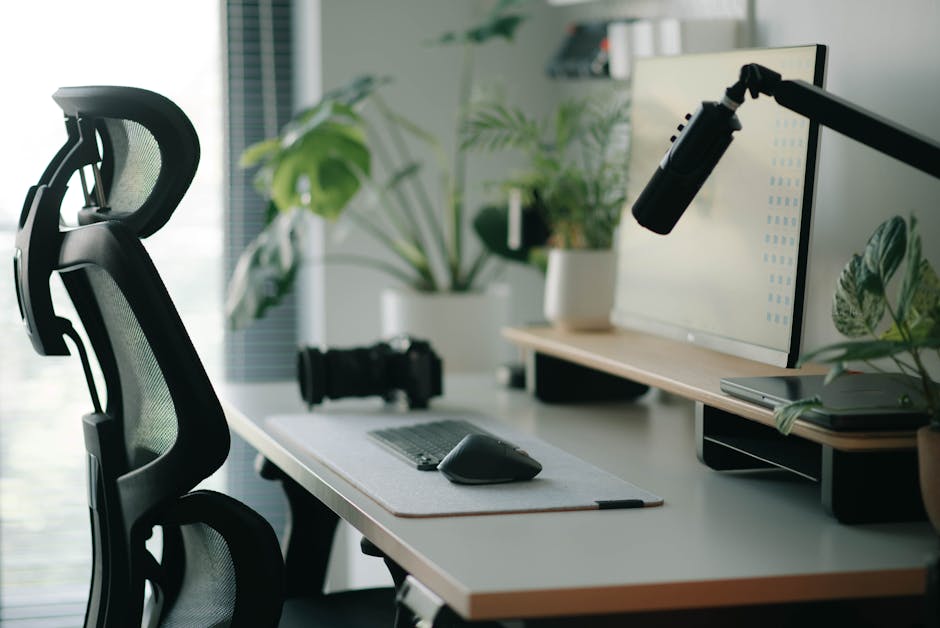
Photo: Alpha En / Pexels
Found this helpful? Share it!
Our team reviews ergonomic furniture, desk accessories, and productivity tools so you don't have to. Every recommendation is based on real research: customer reviews, expert opinions, and value for money. Learn more about us →
When selecting a standing desk for a shorter stature, prioritize models with a lower minimum height (ideally 22-24 inches) rather than standard desks that bottom out at 28-30 inches, ensuring your feet remain flat on the floor during sitting. Pair this with an adjustable footrest rated for your body weight to eliminate dangling legs and reduce lower back strain during extended work sessions.
Setting up an ergonomic home office when you're shorter in stature presents unique challenges that standard furniture simply doesn't address. Most office furniture is designed for average to tall individuals, leaving shorter people struggling with dangling feet, awkward arm angles, and poor posture that leads to back pain and fatigue. The good news is that with intentional choices and the right adjustments, you can create a workspace that's just as comfortable and productive as any standard office setup.
For shorter home office workers, we recommend the Flexispot E7 Standing Desk paired with a Sidiz T50 Petite Office Chair. The E7 has an exceptionally low minimum height of 22.4 inches—the lowest on the market for quality electric standing desks—making it genuinely accessible for people under 5'4". It features dual motors for smooth, quiet adjustment and a spacious work surface that doesn't feel cramped. The Sidiz T50, specifically designed for smaller-framed individuals, has a minimum seat height of 15.5 inches and includes a shorter backrest that properly supports a petite spine. Together, this combination ensures your feet rest flat on the floor (or a footrest) while seated, and your desk height accommodates both sitting and standing positions comfortably.
The primary issue shorter people face is that standard ergonomics become impossible to achieve—you end up compensating with poor posture because the furniture doesn't fit your frame. When your feet dangle, you lose core support and place stress on your lower back. When your desk is too high, your shoulders hunch up toward your ears, creating neck and shoulder tension. The Flexispot E7 and Sidiz T50 combination directly solves these problems by meeting you where you are physically, not forcing you to adapt to furniture designed for someone 5'10" and taller.
Beyond the main pieces, this setup allows you to layer in additional adjustments without feeling like you're jerry-rigging a workspace. A monitor arm prevents you from having to crane your neck down at a screen, while a compact keyboard tray keeps your wrists in a neutral position without requiring you to reach across an oversized desk. The result is a professional, purpose-built workspace that supports 8+ hours of work without the chronic pain and fatigue that comes from compromised ergonomics. You'll notice the difference within the first week.
For shorter individuals, look for desks between 28-30 inches high, or choose an adjustable desk that goes down to 26-28 inches at its lowest setting. Your elbows should rest at a 90-degree angle when seated with your feet flat on the floor, so test the desk height before purchasing if possible.
Yes, a footrest is essential if your feet don't touch the ground when sitting at your desk, as dangling legs cause poor posture and back pain. Look for an adjustable footrest 4-6 inches high that provides a stable platform and helps maintain proper spinal alignment.
Choose a monitor stand or arm that allows you to position your screen at eye level when seated normally—the top of the monitor should be at or slightly below eye height. This typically means a stand 4-6 inches high for shorter individuals, preventing neck strain from looking down at a screen.
Look for chairs with a seat height range of 16-18 inches and adjustable armrests that lower to match your desk height. Test the chair to ensure your thighs are parallel to the floor and your feet rest flat on a footrest, as standard office chairs are often too high for shorter frames.
As an Amazon Associate I earn from qualifying purchases.
← Back to All Reviews| Retailer | Price Range | Shipping | Link |
|---|---|---|---|
| Amazon | Check Current Price | Free (Prime) | View on Amazon → |
| Walmart | Check Site | Free over $35 | Search → |
| Target | Check Site | Free over $35 | Search → |
Prices may vary. Click through to each retailer for current pricing.