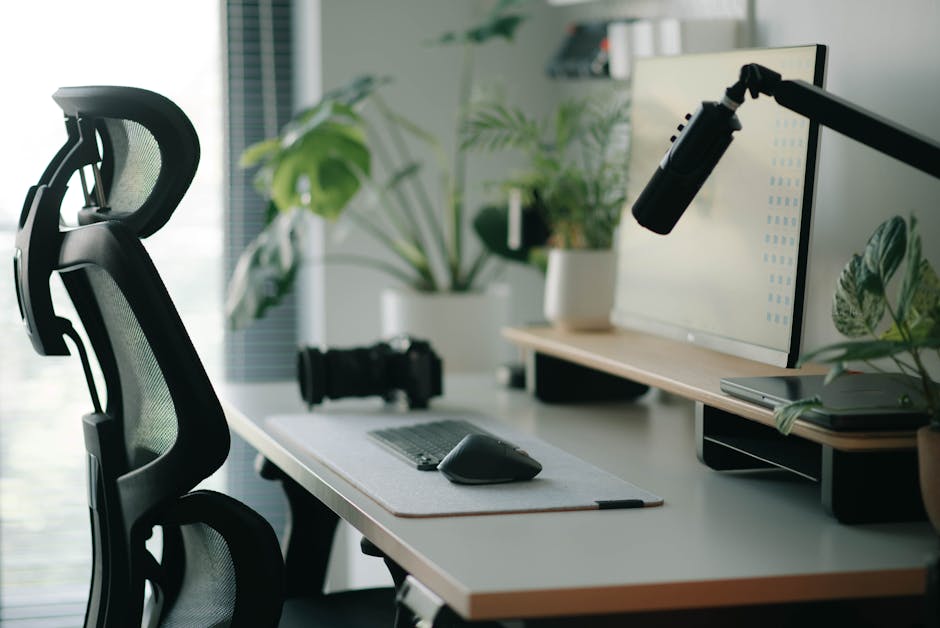
Photo: Alpha En / Pexels
Remote work is the practice of working at or from one's home or another space rather than from an office or workplace.
Found this helpful? Share it!
Our team reviews ergonomic furniture, desk accessories, and productivity tools so you don't have to. Every recommendation is based on real research: customer reviews, expert opinions, and value for money. Learn more about us →
Look for monitor arms with smooth tension adjustment and a weight capacity that exceeds your monitor's actual weight by at least 20% to ensure stable positioning throughout the day without drooping. Verify the arm's reach extends far enough to position your screen at arm's length away and at eye level when seated, as this measurement varies significantly across brands and directly impacts whether it will actually reduce neck and back strain.
If you're spending 8+ hours a day working from home, your monitor placement is quietly sabotaging your spine. Most people position their screens too low or too far away, forcing them into a constant forward slouch that strains the neck, shoulders, and lower back. A properly adjusted ergonomic monitor arm isn't just an accessory—it's a legitimate solution to one of the most common work-from-home injuries.
The Huanuo Single Monitor Arm with Gas Spring is our recommendation for most remote workers because it delivers professional-grade adjustability without professional-grade pricing. This arm supports monitors up to 27 inches and 17.6 pounds, features smooth 360-degree rotation, full-range height adjustment (up to 19 inches), and includes built-in cable management. The C-clamp design mounts directly to your desk without taking up surface space, and the gas spring mechanism feels buttery smooth—you genuinely want to adjust it throughout the day, which means you'll actually use it to maintain correct posture.
What makes it perfect for reducing back pain specifically: the arm keeps your monitor at true eye level, preventing the forward head posture that's the #1 culprit in work-from-home back problems. It's also affordable enough that you're not overthinking the purchase, yet durable enough that it won't develop wobbles after three months of daily use.
Back pain from desk work isn't really about your chair—it's about your monitor forcing you into a forward head posture. Every inch your head moves forward puts an additional 10 pounds of stress on your cervical spine and neck muscles. When your monitor sits too low, you crane downward. When it's too far away, you lean forward. Both habits compress your lower back discs and fatigue the muscles holding your spine in place. A monitor arm solves this at the source by making it effortless to position the screen exactly where it should be: eye level, about an arm's length away, perpendicular to windows (to reduce glare).
The second benefit is less obvious but equally important: the ability to adjust your setup throughout the day prevents fatigue and muscle strain from static positioning. A good monitor arm lets you tilt the screen slightly, rotate it between landscape and portrait, or raise it higher when you're doing video calls. These micro-adjustments keep different muscle groups engaged and prevent the repetitive strain that compounds into chronic pain. Combined with a proper chair and desk height, a monitor arm becomes the final piece that actually makes your home office ergonomic rather than just looking the part.
Your monitor should be positioned so the top of the screen is at or slightly below eye level when sitting with your back straight, approximately 20-26 inches from your eyes. This prevents you from looking down, which causes neck and upper back strain. If you wear bifocals, position it slightly lower to maintain a natural viewing angle.
An ergonomic monitor arm should allow you to adjust height, tilt, swivel, and rotation without tools, and support your monitor's weight without drooping. It should position your screen directly in front of you at arm's length away, with your shoulders relaxed and elbows at 90 degrees. Look for arms with smooth adjustment mechanisms and weight ratings that match or exceed your monitor.
Yes, monitor arms can significantly reduce back pain when set up correctly by eliminating the forward head posture that causes strain on your cervical and lumbar spine. Poor monitor positioning forces your neck forward and rounds your shoulders, compressing discs and straining muscles—a proper arm setup maintains neutral spine alignment. Most users report noticeable relief within 1-2 weeks of proper ergonomic adjustment.
Desk-mounted arms are best for most remote workers because they're easier to install, adjust, and move if you change desks, and they don't require drilling into walls. Wall-mounted arms save desk space and are ideal if your desk is small or already cluttered, but require proper installation into wall studs for safety. For flexibility and ease of adjustment, desk clamp mounts are the most popular choice.
As an Amazon Associate I earn from qualifying purchases.
← Back to All Reviews| Retailer | Price Range | Shipping | Link |
|---|---|---|---|
| Amazon | Check Current Price | Free (Prime) | View on Amazon → |
| Walmart | Check Site | Free over $35 | Search → |
| Target | Check Site | Free over $35 | Search → |
Prices may vary. Click through to each retailer for current pricing.