By Best Home Office Picks Daily • July 25, 2026 • Contains affiliate links
Affiliate Disclosure: As an Amazon Associate, we earn from qualifying purchases. Clicking our links costs you nothing extra and helps us keep reviewing products for free.
Summer heat transforms home offices into productivity killers. When temperatures rise, your chair traps sweat, your focus evaporates, and your back starts complaining by 2 PM. The question isn't whether to upgrade—it's what to upgrade first.
When choosing an ergonomic chair for summer home office use, prioritize adjustable lumbar support and breathable mesh materials over leather or fabric that can become uncomfortable in warm temperatures. Test the chair's height adjustment range to ensure your feet rest flat on the floor and your desk surface reaches elbow height when seated, as improper positioning can lead to strain even with a premium chair.
This guide compares three core investment categories: breathable ergonomic chairs with mesh backing, sit-stand desks that let you move between positions, and cooling accessories like under-desk fans and ventilated pads. Each addresses summer comfort differently, and the right choice depends on your budget, existing setup, and primary pain point.
We've grounded this in actual product features and real trade-offs—not generic praise for any single brand. Whether you're starting from scratch or retrofitting an existing workspace, here's how to decide what matters most.
Breathable Mesh Ergonomic Chairs
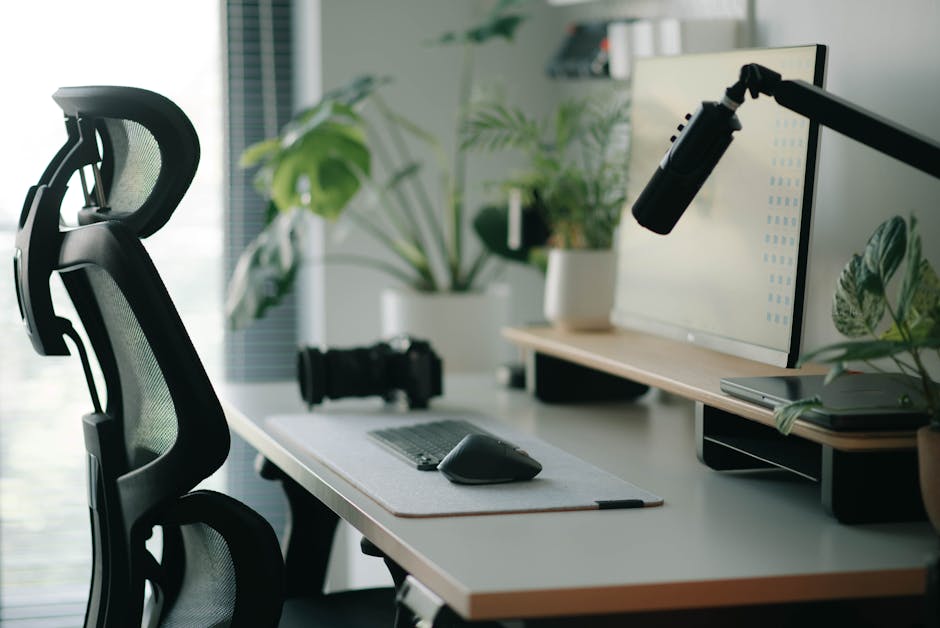
Ergonomic chairs with breathable mesh backing directly solve heat buildup. Unlike padded upholstery that traps moisture, mesh allows airflow around your back and seat during long sessions. Quality options include adjustable armrests, seat height, and backrest recline—meaning you can customize fit without adding separate accessories. Many factory-direct brands position these as foundation investments, with average price points around $300–600.
Key features to verify: moisture-wicking fabric, lumbar support adjustment, and weight capacity well above your actual load. In summer, these chairs reduce the sweaty-back problem immediately but don't address heat from ambient temperature alone.
Best for: Anyone sitting 6+ hours daily who prioritizes core comfort and heat management. Start here if your current chair is non-adjustable or traps heat.
Sit-Stand Desks (Adjustable Height)
Standing desks with smooth height transitions reduce fatigue by letting you alternate positions throughout the day. Rather than radiating heat from prolonged sitting, you're moving, which naturally improves circulation and reduces localized pressure points. Quality sit-stand desks feature sturdy weight capacity ratings (typically 150+ lbs) and can handle equipment loads without wobbling as temperatures and humidity shift.
Key features to verify: adjustable height range (typically 28–48 inches), smooth electric or manual transition, and stable frame construction. These work best paired with a good chair, not as standalone heat solutions. A standing desk alone won't cool you down; it prevents heat from compounding via static sitting.
Best for: Remote workers with flexible schedules who can alternate positions hourly. Best paired with an ergonomic chair for the sitting portions. Requires more desk space than fixed-height alternatives.
Cooling Desk Accessories (Fans, Ventilated Pads, AC Units)
Under-desk fans, personal AC units, and ventilated desk pads provide direct cooling without furniture replacement. Quiet-operation desk fans cost $30–100 and work alongside existing chairs and desks. Ventilated pads sit under your cushion or on your desk surface to improve airflow. Personal AC units are higher-end ($300+) but deliver localized temperature control.
Key features to verify: adjustable fan speed settings, quiet operation (critical for video calls), and compatibility with your current desk/chair. These are fast, low-commitment upgrades but address symptoms rather than root ergonomic problems. A cheap fan can't fix a bad chair's lumbar support.
Best for: Budget-conscious upgraders, renters, or anyone needing quick summer relief without replacing furniture. Best used alongside ergonomic improvements, not instead of them.
Factory-Direct Brands (e.g., Sunaofe)
Factory-direct ergonomic furniture eliminates retail markup, typically pricing sit-stand desks and ergonomic chairs 20–35% lower than retail equivalents. Quality factory-direct brands specialize in modular, adjustable designs—mesh chairs with multiple adjustment points, desks with height memory presets, and compatible accessory ecosystems. Average order values hover around $400+, and these companies often publish detailed adjustment guides for summer-specific setup.
Key considerations: Verify weight capacity, warranty terms, and return policies before committing. Factory-direct pricing is genuinely lower, but you lose local showroom testing. Read reviews focused on long-term durability in humidity, not just initial comfort.
Best for: Buyers planning comprehensive setups who value customization and direct pricing. Best if you're replacing multiple pieces at once and want consistent design language across furniture.
Hybrid Approach (Chair + Desk + Accessories)
The most resilient summer setups combine all three: a breathable ergonomic chair, a sit-stand desk for position flexibility, and at least one cooling accessory (desk fan or ventilated pad). This addresses heat from posture, movement, and ambient temperature simultaneously. Total investment ranges $600–1,200 depending on brand and specs.
Implementation strategy: Prioritize the chair first (largest contact surface for heat), then add the desk for movement options, then accessories for fine-tuning comfort. This staged approach lets you test each component and adjust before the next purchase.
Best for: Serious remote workers who spend 8+ hours daily in their office and can justify moderate investment. Provides redundancy: if one component fails, others still support comfort.
✓ Sit-stand desks improve circulation and reduce fatigue from static sitting, compounding comfort gains when paired with a good chair.
✓ Cooling accessories (fans, pads) offer fast, low-cost improvements for existing setups, ideal for renters or budget constraints.
✓ Factory-direct pricing saves 20–35% versus retail brands when buying multiple pieces, and specialized summer-focused guidance is often included.
Cons
✗ No single solution addresses summer heat completely; combining furniture + accessories yields better results than any one purchase alone.
✗ Mesh chairs sacrifice aesthetic padding for breathability—some find them less plush despite superior ergonomics.
✗ Sit-stand desks require discipline to actually alternate positions; stationary use negates their movement benefit.
✗ Cooling accessories are temporary fixes; a poor-quality chair or sedentary posture will still cause problems regardless of fans.
Our Verdict
Start with the chair, add the desk, then accessorize. If your budget allows only one upgrade, choose a breathable ergonomic chair with adjustable lumbar support and mesh backing—it's your largest heat source and fixes posture simultaneously. Expect to spend $300–600 for quality.
If you have $800–1,200, add a sit-stand desk next. The combination of a good chair plus position flexibility handles 80% of summer discomfort. Verify that your standing desk has smooth height transitions and your chair's armrests won't collide with desk edges at different heights.
Cooling accessories (under-desk fans, ventilated pads) are third priority—they're genuinely useful for fine-tuning comfort and cost $30–100, but they can't compensate for a bad chair or static posture. Add these once your furniture foundation is solid.
Factory-direct brands deliver real value if you're buying multiple pieces; their average order value of $400+ reflects realistic pricing for quality adjustable furniture. However, don't let brand name drive your decision. Prioritize specific features—mesh backing, height adjustability, weight capacity ratings—over retail positioning. A $500 factory-direct chair with poor lumbar adjustment loses to a $400 alternative with superior support, regardless of direct-to-consumer claims.
Frequently Asked Questions
Do I actually need a standing desk, or is a good chair enough for summer?
A quality ergonomic chair handles most summer discomfort if you're willing to take frequent movement breaks (every 45–60 minutes). A standing desk eliminates the discipline requirement—you're forced to move, which improves circulation naturally. If you're sedentary by habit, the desk's value is higher. If you're already active, a chair alone may suffice.
What specific mesh chair features matter most in summer?
Look for high-density mesh that resists sagging, moisture-wicking fabric (polypropylene or similar synthetic blends), adjustable lumbar support, and a seat cushion that breathes (not a solid foam pad). Verify that the backrest height reaches mid-shoulder, and that armrest height adjusts independently—these prevent pressure points that trap heat.
Can I use cooling accessories (fans, pads) instead of replacing my current chair?
Cooling accessories provide temporary relief but don't fix poor ergonomics. If your current chair lacks lumbar support or forces you into bad posture, a fan won't prevent back pain—it only masks heat. Use accessories to supplement a decent chair, not replace one.
How much does it actually cost to set up a summer home office from scratch?
Budget $300–600 for a quality mesh ergonomic chair, $400–800 for a sit-stand desk (electric models are faster but pricier), and $30–150 for cooling accessories. Total: $730–1,550 for a complete setup. Factory-direct pricing reduces this by 15–25% if you're buying multiple pieces simultaneously.
Is factory-direct furniture as durable as retail brands?
Yes, with caveats. Factory-direct eliminates markup, not quality. Check warranty terms (2–5 years is standard), return policies, and reviews specifically about long-term durability in humid climates. Some factory-direct brands excel; others cut corners on materials to hit price targets. Read recent reviews focused on 1–2 year longevity, not initial impressions.
Should I buy everything at once or upgrade in stages?
Staged upgrades are safer. Buy the chair first, use it for 2–4 weeks, then add the desk if you still want more flexibility. This approach lets you test compatibility and avoid costly mistakes. Only buy all at once if you're replacing an entire workspace or working with professional guidance.
Our team reviews ergonomic furniture, desk accessories, and productivity tools so you don't have to. Every recommendation is based on real research: customer reviews, expert opinions, and value for money. Learn more about us →
This post contains affiliate links. We may earn a commission if you purchase through our links at no extra cost to you.