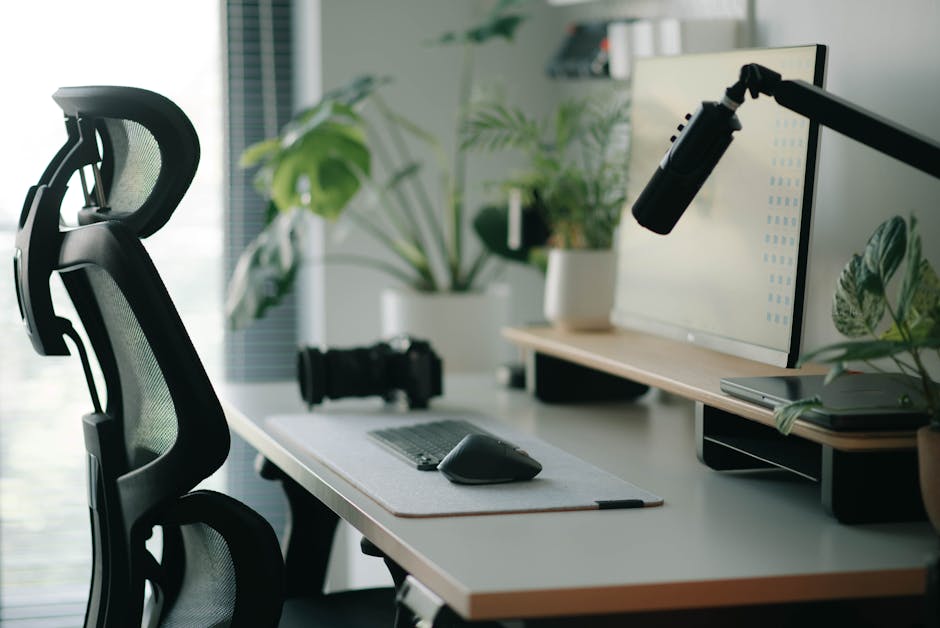
Photo: Alpha En / Pexels
Remote work is the practice of working at or from one's home or another space rather than from an office or workplace.
Found this helpful? Share it!
Our team reviews ergonomic furniture, desk accessories, and productivity tools so you don't have to. Every recommendation is based on real research: customer reviews, expert opinions, and value for money. Learn more about us →
Before purchasing a monitor stand, verify that it offers both height and tilt adjustments so your screen can be positioned at eye level when seated and standing, as this prevents neck strain and maintains proper posture throughout the workday. Check the weight capacity and stability of the base to ensure it can safely support your monitor without wobbling, especially if you plan to adjust it frequently during transitions between sitting and standing positions.
The best monitor stand for ergonomics is an adjustable model that allows you to position your screen at eye level, typically 20-26 inches from your eyes, with the top of the monitor at or slightly below eye height. This positioning reduces neck strain, improves posture, and minimizes eye fatigue during long work sessions.
An ergonomic monitor stand should be adjustable in height and tilt to accommodate your individual workspace setup and body proportions. The ideal stand elevates your monitor so the top of the screen aligns with your eye level when you're sitting upright, preventing you from looking down or up at your display. Look for stands with swivel capabilities, cable management features, and sturdy construction that can support your monitor's weight without wobbling. Investing in a quality adjustable monitor stand is one of the most impactful changes you can make to your home office setup.
Monitor height and positioning directly impact your ergonomic health. When monitors sit too low, you're forced to bend your neck downward, creating strain on your cervical spine and upper back muscles. Conversely, positioning your screen too high causes you to crane your neck upward, leading to fatigue and tension headaches. The optimal viewing angle is approximately 15-20 degrees below your horizontal eye line when looking straight ahead.
Distance matters as well. Your eyes should be positioned 20-26 inches from the screen—roughly an arm's length away. This distance reduces eye strain and allows your eyes to focus comfortably without overexertion. Monitor stands that offer height adjustment let you fine-tune this distance based on your monitor size, desk height, and personal preferences.
Adjustability is the key differentiator. The best ergonomic monitor stands offer multiple adjustment options: height, tilt, and swivel. Height adjustment ensures you can raise or lower your screen regardless of your desk surface. Tilt adjustment allows you to angle the monitor to reduce glare and screen reflections. Swivel functionality lets you rotate your monitor slightly to reduce neck twisting when collaborating with colleagues or viewing content from different angles.
Monitor stand types include: Basic stands that provide fixed elevation, adjustable stands with pneumatic or mechanical lift systems, monitor arms mounted to desks, and monitor risers designed to sit on existing desks. For most home office workers, an adjustable stand offers the best balance of affordability and functionality.
Occupational health experts and ergonomic specialists consistently recommend monitor stands as a foundational element of any ergonomic workspace. The American Optometric Association states that proper monitor positioning can reduce digital eye strain by up to 70 percent. Physical therapists emphasize that correct screen height prevents the forward head posture that leads to chronic neck and shoulder pain—a condition known as "tech neck" that affects millions of remote workers.
OSHA guidelines recommend that computer monitor screens be positioned so the top of the screen is at or slightly below eye level. The Occupational Safety and Health Administration further suggests that screens should be tilted 15-20 degrees below your line of sight to reduce eye fatigue. These standards have become the industry baseline for ergonomic workspace design.
An adjustable monitor stand directly solves the positioning problems that cause discomfort and reduce productivity. When you can customize your monitor's height, tilt, and angle, you're creating a workspace tailored to your specific body dimensions and preferences. This personalization is what separates adequate setups from truly ergonomic ones.
Quality adjustable monitor stands often include additional benefits like storage underneath the stand for office supplies or documents, improving your desk organization. Some models feature integrated cable management systems that keep your cords organized and out of sight. Premium stands
As an Amazon Associate I earn from qualifying purchases.
← Back to All Reviews Shop on Amazon →Your monitor should be positioned so the top of the screen is at or slightly below eye level when sitting with your back straight, typically 15-20 degrees below horizontal. The screen should be 20-26 inches away from your eyes, which means a monitor stand should raise the screen to approximately 16-18 inches above your desk surface for most people.
Monitor arms are generally better for ergonomics because they offer full adjustability (height, tilt, rotation, and depth) without taking up desk space, allowing you to customize positioning to your exact needs. However, they cost more than basic stands, so a quality adjustable monitor stand works well if budget is a concern, as long as it provides height adjustment and tilt functionality.
Yes, positioning your monitor at the correct height with a proper stand can significantly reduce neck and back pain by eliminating the strain of looking down or up at your screen. Many remote workers experience relief within days of adjusting their monitor height, as proper alignment reduces tension in the cervical and thoracic spine.
Look for adjustable height (at least 4-6 inches of range), tilt adjustment (up to ±15 degrees), and sturdy construction that won't wobble under monitor weight. Built-in cable management and extra storage space are helpful bonuses, but height and tilt adjustability are the essential features for proper ergonomics.
| Retailer | Price Range | Shipping | Link |
|---|---|---|---|
| Amazon | Check Current Price | Free (Prime) | View on Amazon → |
| Walmart | Check Site | Free over $35 | Search → |
| Target | Check Site | Free over $35 | Search → |
Prices may vary. Click through to each retailer for current pricing.