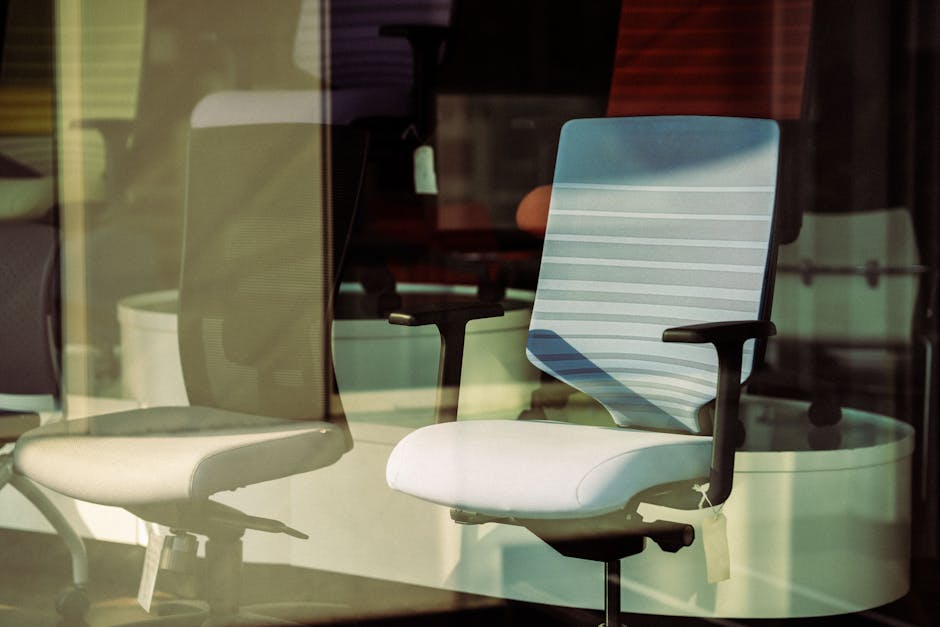
Photo: aboodi vesakaran / Pexels
Remote work is the practice of working at or from one's home or another space rather than from an office or workplace.
Found this helpful? Share it!
Our team reviews ergonomic furniture, desk accessories, and productivity tools so you don't have to. Every recommendation is based on real research: customer reviews, expert opinions, and value for money. Learn more about us →
If you're reading this while shifting in your seat for the fourth time in an hour, you already know the truth: back pain doesn't stay at your desk. It follows you to bed, to the gym, to the moment you bend down to tie your shoes. And when you're working from home eight-plus hours a day, the chair underneath you isn't furniture — it's medical equipment you happen to sit in.
The good news is that the right chair genuinely changes things. Not overnight, and not magically, but within two to three weeks most people with mechanical lower back pain report meaningful relief when their lumbar curve is finally supported the way it's supposed to be. The trick is knowing which features actually matter for pain and which are just marketing on a spec sheet.
When selecting an ergonomic office chair for back pain, prioritize adjustable lumbar support that can be customized to match your spine's natural curve rather than relying on fixed padding, as everyone's back anatomy differs. Test the seat depth and width to ensure your thighs have about one inch of clearance from the edge when sitting back against the lumbar support, preventing circulation issues that can worsen discomfort.
The Steelcase Gesture (with the optional adjustable lumbar and headrest) is our recommendation for people whose primary concern is back pain — and it's not a close call.
Here's specifically why it fits this use case. The Gesture's backrest uses what Steelcase calls a "3D LiveBack," a flexible spine-like structure that changes shape as you move rather than staying rigid. That matters enormously for pain, because most back pain flares aren't caused by one bad posture — they're caused by holding any posture too long. The backrest follows you as you lean, twist to grab something, or shift to one hip, so you stay supported through the micro-movements you make unconsciously all day.
The optional adjustable lumbar sleeve slides vertically along the backrest frame and independently adjusts firmness. This is the single most important feature for pain relief, and it's the one most budget chairs skip. The seat depth adjusts a full 2 inches, the seat height range (16"–21") accommodates most adults between 5'2" and 6'4", and the tilt tension is a real dial, not a two-position toggle — meaning a 130-pound user and a 250-pound user can both get a recline that actually holds them.
It also has a 12-year warranty covering 24/7 use, which reframes the price. At roughly $1,300, spread across 12 years, you're paying about $9 a month for a chair that a physical therapist would charge you $150 an hour to compensate for.
If that's out of budget: the Branch Ergonomic Chair Pro (~$550) offers height-adjustable lumbar and adjustable seat depth — the two features that matter most — at less than half the cost. The Herman Miller Aeron with PostureFit SL is also excellent, particularly if you run warm or find cushioned seats uncomfortable after a few hours, though its sizing is less forgiving.
Most chair-related back pain comes from posterior pelvic tilt — your pelvis rolls backward, your lumbar curve flattens into a C-shape, and the load that should be distributed through your spinal column instead gets absorbed by discs and ligaments that weren't designed for it. Hold that for six hours a day, five days a week, and you get the dull, deep ache that shows up around 2pm and doesn't leave. A properly positioned lumbar support physically prevents that pelvic rotation. It's not about "good posture" as a matter of willpower; it's about making the healthy position the path of least resistance so you don't have to think about it. The Gesture's adjustable lumbar lets you place that support exactly where your curve sits, which is why the vertical adjustment matters so much more than the presence of lumbar support alone.
The second mechanism is movement. Research on seated work consistently shows that postural variety, not postural perfection, predicts comfort over long days. A chair that supports you in exactly one position will hurt eventually, no matter how ergonomically pristine that position is. The Gesture's flexible backrest and generous recline range mean you can work upright for a stretch, lean back to read, shift to one hip during a call, and remain supported through all of it. Your spine gets the load variation it needs. Combine that with a standing desk or even a simple habit of getting up every 45 minutes, and you're addressing the actual root cause rather than just cushioning the symptom.
Your back has been sending you the same message for months, and a chair with real lumbar height adjustment is the cheapest, fastest way to answer it. Take five minutes to measure your seated knee height and the distance from your seat to the top of your pelvis, then check those numbers against the adjustment ranges above — and if you can, sit in your top choice for a full 30 minutes before you commit.
Look for a chair with lumbar support that matches your spine's natural curve, adjustable seat height, and a backrest that reclines between 100-130 degrees. The seat should have adequate cushioning (at least 2-3 inches) and the armrests should be adjustable to keep your shoulders relaxed at your desk.
Quality ergonomic chairs typically range from $300-$1,200, with chairs under $300 often lacking proper lumbar support. Investing $400-$800 usually gets you a chair with excellent adjustability and durable materials that will last 7-10 years, making it cost-effective compared to ongoing back pain.
Not always—what matters most is proper lumbar support, adjustability, and fit for your body type rather than brand name or price. A $500 chair with excellent lumbar adjustment can outperform a $1,500 luxury chair if the latter doesn't support your specific spine curve.
Most people notice improvement within 1-2 weeks of daily use, with significant pain reduction after 4-6 weeks as your posture adjusts. However, an ergonomic chair works best combined with proper desk setup, regular stretching, and good posture habits—it's not a cure-all by itself.
As an Amazon Associate I earn from qualifying purchases.
← Back to All Reviews| Retailer | Price Range | Shipping | Link |
|---|---|---|---|
| Amazon | Check Current Price | Free (Prime) | View on Amazon → |
| Walmart | Check Site | Free over $35 | Search → |
| Target | Check Site | Free over $35 | Search → |
Prices may vary. Click through to each retailer for current pricing.