Photo: Alpha En / Pexels
Remote work is the practice of working at or from one's home or another space rather than from an office or workplace.
Working from home in hot weather creates a genuine tension: you need ergonomic support to prevent repetitive strain injuries and maintain posture, but traditional office furniture—padded chairs, solid desks, enclosed layouts—traps heat and makes focus impossible when temperatures climb.
The solution isn't choosing between ergonomics and cooling. Instead, you need to understand which furniture types actually perform in warm conditions, what ventilation strategies genuinely help, and where trade-offs exist. This guide compares the specific options mentioned across current setup guides: standing desk systems, breathable mesh chairs, desk material choices, and layout strategies—each with real strengths and limitations.
When selecting ergonomic furniture for hot weather work environments, prioritize materials with breathable mesh or moisture-wicking properties for chairs and backrests, and choose desk surfaces that don't retain heat like light-colored wood or metal with ventilation gaps underneath. Pair these with a compact tower fan or desk clip fan rated for continuous use, since proper airflow can reduce perceived temperature by 3-5 degrees and significantly improve comfort during long work sessions.
Height-adjustable electric desks with at least three preset positions allow you to alternate between sitting and standing throughout the day. Models should have smooth electric motors, verified weight capacity at full extension, and stable construction to prevent wobbling. Standing naturally increases air circulation around your torso and reduces prolonged pressure on the lower back—a particular benefit in hot weather when prolonged sitting intensifies heat buildup.
Best for: Workers who can dedicate budget ($400+) to primary furniture and want long-term postural benefits alongside heat management.
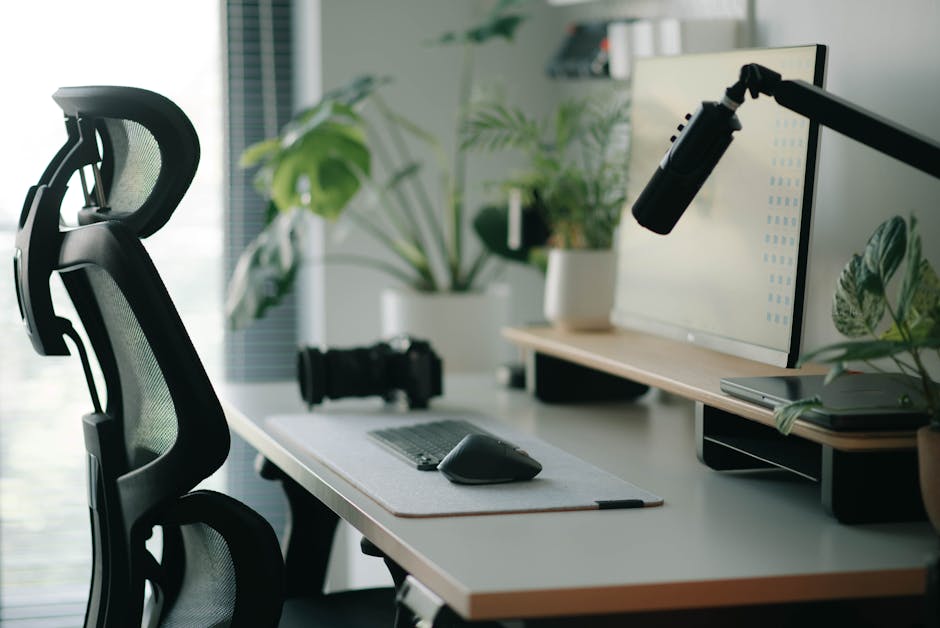
Chairs with breathable mesh backing (rather than padded upholstery or leather) allow continuous airflow and prevent moisture buildup during warm-weather work sessions. Effective models feature adequate ventilation gaps in both backrest and seat cushion, adjustable lumbar support, and materials specifically chosen to dissipate heat. Mesh construction is the most direct furniture intervention for temperature comfort.
Best for: Anyone spending 6+ hours daily seated in warm climates; essential if budget constraints limit other cooling infrastructure.
Desk material choice directly impacts heat absorption in your workspace. Light-colored or reflective surfaces reject heat rather than absorb it, keeping the work surface cooler and reducing radiant heat into your lap and torso. Combined with built-in cable management that allows airflow underneath (rather than trapping heat), this approach is low-cost and passive—it works without electricity or maintenance.
Best for: Budget-conscious setups or existing furniture upgrades; pairs well with any chair or standing solution.
Strategic positioning of furniture, equipment, and ventilation (fans, AC vents) costs nothing but requires planning. Placing desks to allow air movement underneath and around equipment, keeping heat-generating monitors and processors away from direct body contact, and ensuring clear paths for existing HVAC airflow can reduce perceived and actual temperature by 3–5 degrees without new purchases.
Best for: All setups, especially renters or those unwilling to invest in new furniture; works as a complement to any furniture choice.
The most effective hot-weather home office combines proper ergonomic furniture (standing desk + mesh chair) with external cooling strategies: dedicated fans, portable AC units, or strategic HVAC optimization. This approach addresses both health (ergonomics) and comfort (temperature) but requires higher total investment and ongoing utility costs for cooling devices.
Best for: Professionals in hot climates or regions without central AC who cannot compromise on either posture or comfort; ideal for permanent home office investments.
For hot-weather home offices, start with mesh-back ergonomic chairs and light desk surfaces—they're the highest-impact, most cost-effective interventions. Mesh chairs directly address temperature while maintaining lumbar support; light desks passively reduce radiant heat. Together, they cost $300–500 and work immediately.
If budget allows ($400+), add an electric standing desk with validated weight capacity and smooth motor. The alternating positions genuinely reduce heat-related fatigue by preventing prolonged pressure on the lower back and allowing brief movement—which improves circulation in warm conditions. Standing desks are less critical for temperature than for long-term postural health, but the combination of standing + mesh seating + light desk creates a comprehensively comfortable setup.
However, no furniture choice compensates for inadequate cooling. If your home lacks central AC or adequate ventilation, prioritize active cooling (fans, portable AC units, or improved HVAC) before investing heavily in furniture. Test your current layout with simple changes—repositioning to catch air movement, adding a fan, or even using a light desk surface—before committing to $1000+ in furniture. Ergonomic furniture solves postural problems; cooling solves temperature problems. The best hot-weather setup addresses both, but in the right order.
Standard ergonomic guidance: elbows at 90 degrees when seated, with wrists neutral. Desk height should place your keyboard and mouse at elbow level. This doesn't change in hot weather, but standing desks let you vary height throughout the day, which naturally increases air circulation around your torso—an indirect cooling benefit.
Current ergonomic research suggests 20–30 minute intervals, switching every hour. This reduces repetitive strain and, in hot climates, prevents prolonged pressure buildup that intensifies heat sensation. Consistency matters more than duration; users who skip the habit altogether lose the benefit entirely.
Padded chairs trap body heat and moisture, creating a humid microclimate between you and the seat. Mesh allows continuous airflow, dissipating both heat and perspiration. The trade-off: less cushioning for short-term comfort, but significantly better long-session tolerance in warm climates.
Electric standing desks are designed for year-round use. The ergonomic benefits (reduced lower-back strain, improved circulation) apply regardless of season. The hot-weather advantage is the added cooling effect of position changes and air movement. Most value comes from consistent use, not seasonal switching.
Yes, but modestly—typically 2–5 degrees difference compared to dark surfaces in direct sunlight. The benefit compounds when combined with furniture choices and layout optimization. Light surfaces are most effective in bright home offices; in already-shadowed spaces, the gain diminishes.
Factory-direct brands typically offer lower prices than retail equivalents with similar specs, but 'cheaper' doesn't mean 'cheap'—quality ergonomic furniture still costs $300+. Compare specific models and warranty terms rather than assuming factory-direct guarantees better value.
Found this helpful? Share it!
Our team reviews ergonomic furniture, desk accessories, and productivity tools so you don't have to. Every recommendation is based on real research: customer reviews, expert opinions, and value for money. Learn more about us →
This post contains affiliate links. We may earn a commission if you purchase through our links at no extra cost to you.
← Back to Best Home Office Picks Daily| Retailer | Price Range | Shipping | Link |
|---|---|---|---|
| Amazon | Check Current Price | Free (Prime) | View on Amazon → |
| Walmart | Check Site | Free over $35 | Search → |
| Target | Check Site | Free over $35 | Search → |
Prices may vary. Click through to each retailer for current pricing.