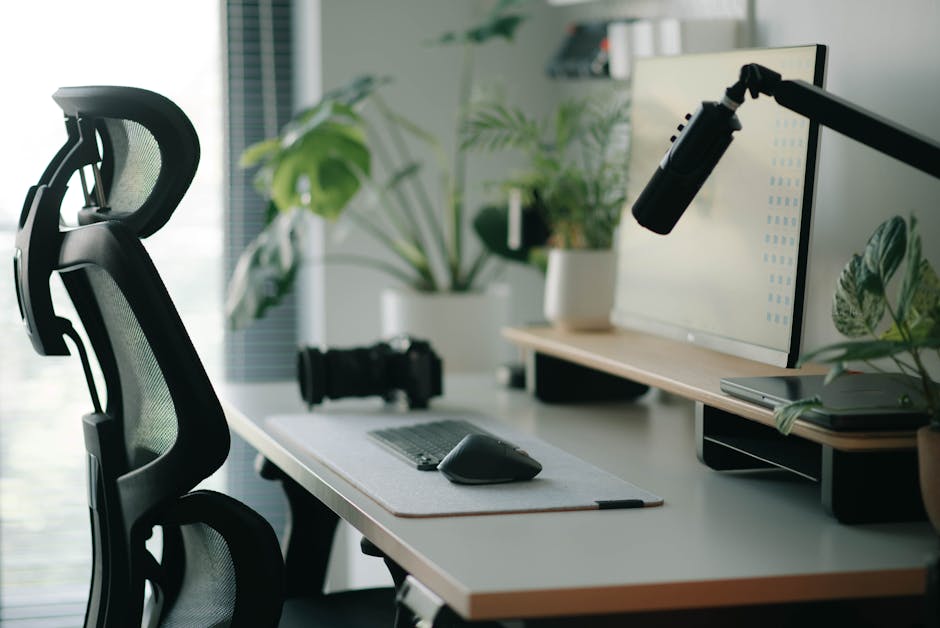
Photo: Alpha En / Pexels
Remote work is the practice of working at or from one's home or another space rather than from an office or workplace.
Building a productive work-from-home setup requires more than just a desk and chair. The right accessories address three core challenges: ergonomic strain, inadequate lighting, and workspace clutter. But not every accessory solves the same problem, and budget-conscious remote workers need to know which purchases deliver real ROI versus which are nice-to-have.
This guide compares the actual product categories and options that appear repeatedly in research across successful home office setups: monitor arms versus stands, ergonomic input devices, anti-fatigue footrests for standing desks, task lighting solutions, and cable management systems. We'll break down the specific pros and cons of each category so you can build a setup that genuinely reduces strain, eliminates distractions, and keeps you productive through an 8-hour workday.
Before investing in ergonomic gear, measure your current desk height and monitor distance to ensure any new accessories like monitor stands or keyboard trays will position your screen at eye level and keep your elbows at a 90-degree angle, preventing the common mistake of buying items that don't match your existing setup. This prevents wasted spending on pieces that won't actually fit your workspace or improve your posture.
Monitor arms and stands both elevate your screen to eye level—the single most important ergonomic adjustment you can make. Monitor arms mount to your desk via clamp or grommet and offer full adjustability: height, tilt, swivel, and sometimes depth reach up to 22-48 inches. Monitor stands sit directly on your desk surface and provide fixed or limited height adjustment. Arms require verification that they support your monitor's weight before purchasing; stands need desk depth available and don't reclaim surface space if mounted to a pole.
Best for: Monitor arms suit desks with limited surface space or users who frequently adjust viewing angles; stands work for fixed setups where adjustability isn't critical
Standard keyboards and mice force your wrists into unnatural angles, causing carpal tunnel, repetitive stress injuries, and fatigue over time. Ergonomic mice feature contoured shapes that keep wrists neutral; ergonomic keyboards (mechanical or split-design) promote better arm positioning. These are the most-used accessories in any home office and typically deliver noticeable comfort gains within days of switching. Quality ergonomic input devices range from $30–$150 but prevent far costlier medical issues down the road.
Best for: Anyone spending 6+ hours daily typing or mousing; essential for users with existing wrist pain or carpal tunnel risk
Prolonged standing causes feet and lower back fatigue, deteriorating posture and productivity. Anti-fatigue footrests with memory foam or specialized cushioning reduce impact on feet while engaging different muscle groups. Look for adjustable angle or rocker features to promote subtle foot movement, height between 4–6 inches (so knees don't push into awkward positions), and non-slip surfaces to prevent sliding during weight shifts. These aren't optional for standing desk users—they transform comfort during long standing sessions.
Best for: Remote workers using standing desks for 4+ hours daily; critical for preventing end-of-day fatigue that triggers poor posture
Inadequate lighting causes eye strain, headaches, and reduced alertness throughout the workday. Task lighting focuses illumination directly on your work surface without creating glare on screens. Look for adjustable brightness, color temperature control (ideally 3000K–5000K), and positioning that prevents shadows on your keyboard and monitor. A quality desk lamp ($40–$100) is one of the cheapest productivity upgrades but delivers immediate, measurable impact on comfort and focus.
Best for: Workspaces with limited natural light or positioned away from windows; anyone experiencing afternoon eye fatigue
Tangled cables create visual clutter, trap dust, make equipment changes difficult, and psychologically increase mental load. Cable management includes clips, trays, sleeves, and organizers that route cords out of sight and group them logically. While often overlooked in initial budgets, proper cable management is essential for maintaining an organized setup that gets daily use. Systems range from simple adhesive clips ($5) to integrated desk trays ($50+), but all reduce distractions and make troubleshooting faster.
Best for: Any setup with multiple monitors, peripherals, or power sources; essential for maintaining long-term organization
The highest-ROI work-from-home accessories address ergonomics first, then organization. Start with monitor elevation (arm or stand, depending on your desk space), ergonomic input devices, and task lighting—these three categories prevent injury and fatigue. If you use a standing desk, add an anti-fatigue footrest with adjustable angle and proper height (4–6 inches). Finally, implement cable management to eliminate distractions and maintain the setup long-term. Brands mentioned in research like COLAMY (office chairs, $200+) and Sunaofe (ergonomic furniture, $400+) focus on larger pieces, but individual accessories from established manufacturers often deliver better value per item. Measure your desk before purchasing monitor arms, verify weight capacity, and don't overlook cable management—these forgotten items are essential for an organized setup that actually gets used daily.
Start with monitor elevation (stand or arm, $30–$80), an ergonomic mouse ($25–$50), and a desk lamp ($40–$70). These three address the most common pain points. Add cable management and a footrest once your core ergonomic setup is complete.
Check the arm's weight capacity (typically 4–17 lbs depending on model) against your monitor's weight. Verify the arm's reach range (how far it extends from the desk) accommodates your desk depth. Confirm your desk is thick enough for clamp-style arms (usually 0.6–3 inches) or has grommet holes for pole-style mounts.
Standing desk footrests are specifically designed for weight shifting and muscle engagement—regular floor mats just cushion but don't promote movement. For standing desks (4+ hours daily), an anti-fatigue footrest with adjustable angle reduces lower back fatigue significantly. For sitting desks, a floor mat or ergonomic stool is more appropriate.
A functional baseline setup costs $200–$400: monitor arm/stand ($30–$100), ergonomic keyboard and mouse ($50–$150), task lamp ($40–$80), cable management ($20–$50), and footrest if standing ($40–$100). Premium options (standing desks, higher-end chairs) push costs to $800–$1,500+, but core ergonomic accessories deliver 80% of the benefit at 20% of the cost.
Monitor arms are better for space-constrained desks, frequent repositioning, or multi-monitor setups—they maximize surface area and offer full adjustability. Stands are better for simple, fixed setups where you don't need repositioning. Both achieve the same primary goal (eye-level viewing) if height is correctly adjusted.
Found this helpful? Share it!
Our team reviews ergonomic furniture, desk accessories, and productivity tools so you don't have to. Every recommendation is based on real research: customer reviews, expert opinions, and value for money. Learn more about us →
This post contains affiliate links. We may earn a commission if you purchase through our links at no extra cost to you.
← Back to Best Home Office Picks Daily| Retailer | Price Range | Shipping | Link |
|---|---|---|---|
| Amazon | Check Current Price | Free (Prime) | View on Amazon → |
| Walmart | Check Site | Free over $35 | Search → |
| Target | Check Site | Free over $35 | Search → |
Prices may vary. Click through to each retailer for current pricing.